Every system in Emberward hangs off one idea: the path is a deck of cards and the towers stand on your own walls. Change any single piece of that and the game would collapse; together they make a tower defense where the layout decisions matter as much as the towers.
Blocks, mazes and the fire
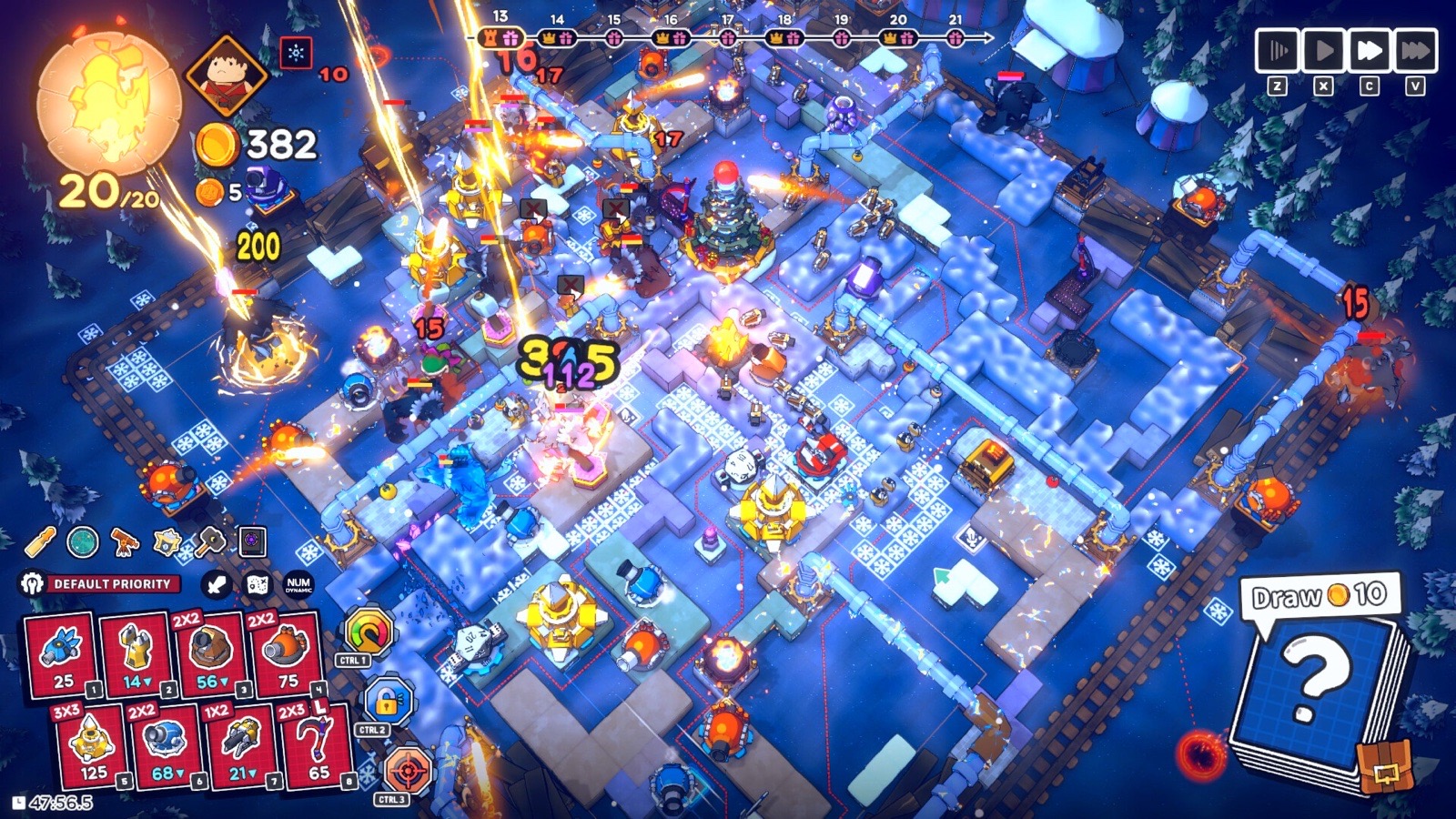
You protect a fire (the Ember). Monsters spawn and walk toward it; every monster that reaches it takes a bite out of its HP. Between spawn and fire stands whatever you built: wall blocks drawn as cards, in tetromino shapes, placed on a grid.
Three properties do the work:
- The blocks are random. You draw shapes, not choose them, so every stage is a small puzzle of fitting what you drew into the maze you want.
- The path is emergent. Monsters walk the shortest way around your walls, so adding one block reroutes the whole board. Longer path, more time under fire.
- Towers need ground. Towers stand on placed blocks (with region-specific exceptions), so maze-building is also tower-placement planning. Runes on some tiles buff whatever tower sits on them, scaled by how much of the tower covers the rune.
The store's own tagline is the tidy version: "Build twisting mazes with tetromino blocks and deploy unique towers in this strategic roguelite tower defense adventure."
A run from start to boss
The shape of a run, as community players and the 2024 press review describe it:
- Pick your kit: a character with a run-long perk, a flame (your fire's nature), a starting set of towers and blocks, and a first relic (examples: extra starting gold, or tower prices randomized between 50 and 150 percent).
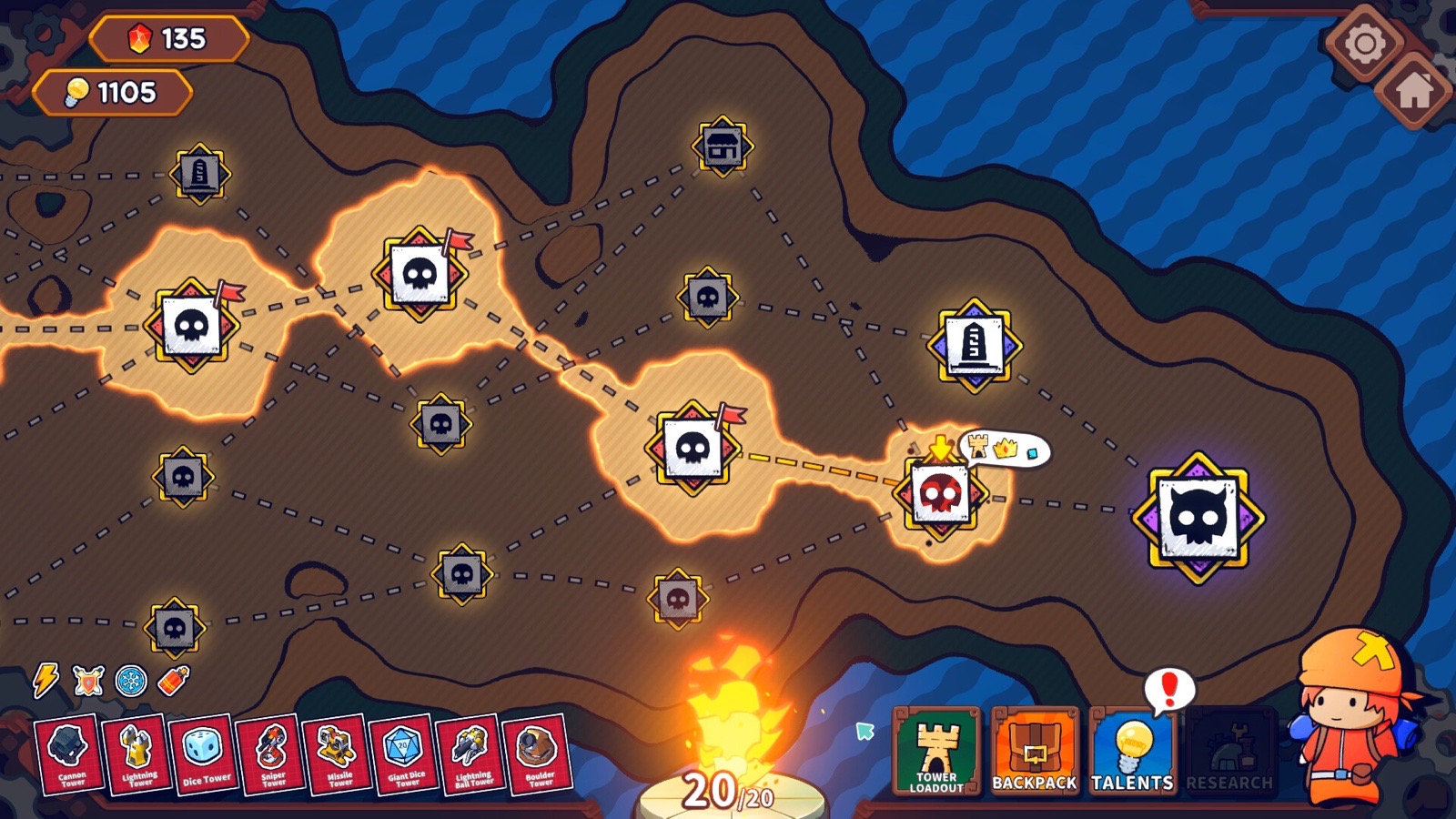
- Walk the map: a branching, Slay-the-Spire-style map of encounters, battles, shops, altars, workshops and risky corrupted nodes. 1.0 guarantees the last stop before a boss offers a Mini Shop or Abandoned Forge.
- Fight: each battle is build phases (draw and place blocks, buy and place towers) alternating with waves. Before the first wave there is no timer: test-fit freely, since blocks can be picked back up within the same build phase.
- Get paid: win a battle for rewards (towers, blocks, relics); spend Ember Stones at altars and shops; bank XP into the talent tree between runs.
- Beat the boss: each of the five regions ends in a boss with its own twist, then the next region opens.
Endless, Challenge, Enigma Sanctum and the daily/weekly structures wrap around this; the modes page sorts them.
The systems around the run
Three meta layers persist beyond any single run:
- The talent tree: XP earned in runs buys permanent perks, freely respecable at any time. Community favorites include Ember Spark (the fire defends itself), reroll charges and cheaper upgrades.
- Unlockables: characters unlock through challenges; 1.0 added main-menu backgrounds for clearing each region and block skins as an XP sink (12 at launch).
- The Compendium: the in-game encyclopedia of monsters, relics and completion records, which the community treats as the reference the game still lacks an external wiki for (this site exists to be that).
Money inside a run splits along one honest tension: drawing more cards (more blocks, more options) versus building and upgrading towers (more firepower now). The tips page has the community's accumulated wisdom on pacing that split, and the towers, characters, flames and relics pages hold the catalogs.
FAQ
Is Emberward like Tetris?
Only in the shapes. Blocks come in tetromino forms, but there are no lines to clear: the shapes are maze-building material. A community joke names one unlockable character themed around clearing rows, which is the game winking at the comparison.
Is it like Slay the Spire?
The run structure is: a branching map of battles and shops, relic synergies, escalating difficulty, single-player. The battles themselves are pure tower defense instead of card combat. The developer has cited Slay the Spire's Ascension as a reference for the endgame difficulty ladder.
Do I need to play the meta progression?
The talent tree helps but can be respeced freely, and the game is completable without grinding it. One camp of reviewers argues the meta layer could vanish entirely without loss; the majority treats it as a light, welcome bonus.
How long is one run?
Hours, not minutes: community reports put a full campaign run in the multiple-hours range, and Endless mode is open-ended. Plan a run like an evening, not a coffee break.